


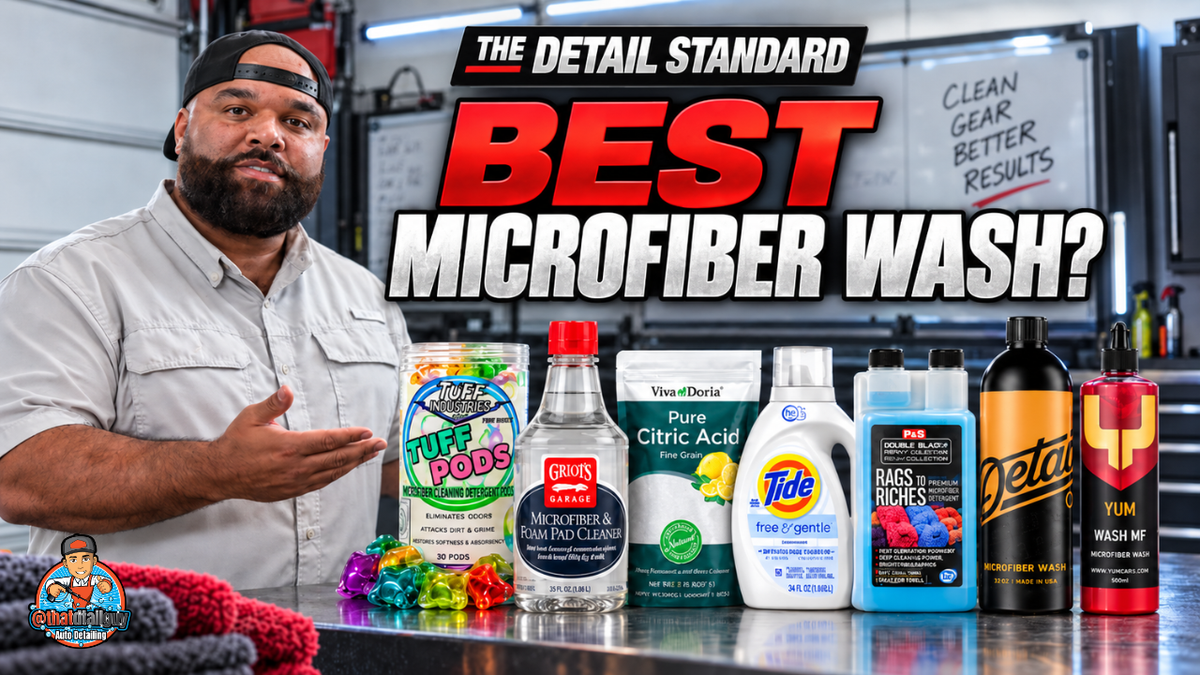
What is actually the best way to clean dirty microfiber towels? For the first episode of The Detailing Standard, I put seven detergents and cleaning methods through real loads of towels from real details. The strongest cleaner and the overall winner were two different products.
I’m Gary, thatdtailguy. I wanted to know whether a specialty microfiber wash earns its place on the shelf, whether regular Tide can compete, and what a wash really costs once you count the presoak and any extra detergent. Here are the results, the process, and the parts of this test that still need work.
Disclosure: I own That Detail Shop and distribute some of the brands featured here. Some links are affiliate links; I may earn a commission at no additional cost to you. These relationships are disclosed alongside the results.
The result, in two answers
Best overall score
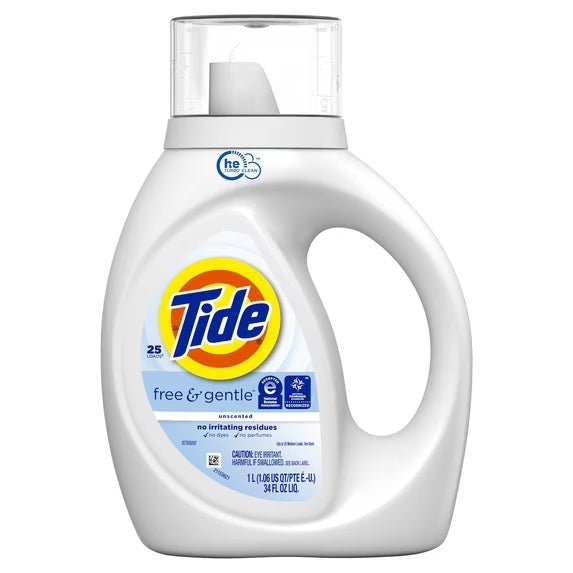
Tide Free & Gentle
26 points
81.0% visually clean. About $0.29 per tested load. The strongest overall result under this scoring system.
Highest visual cleaning rate
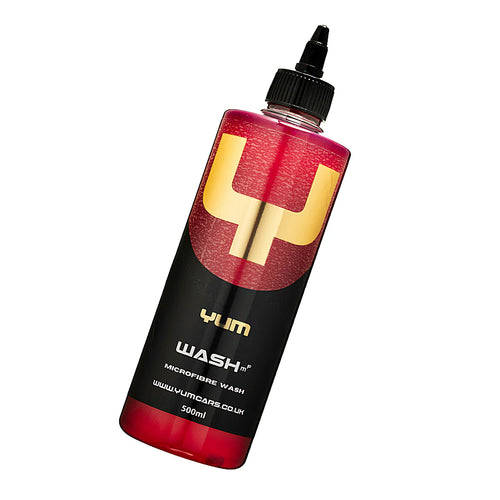
YumCars Yum Wash MF
91.7% clean
22 of 24 items judged clean, with a presoak. About $2.96 per scored treatment.
Read these as results from one real-world round. The loads did not start with identical towels or identical contamination. These percentages describe my visual inspection, not laboratory cleaning efficiency or proof of restored absorbency.
Watch the full test
See the towels, the sorting process and my reactions as the results came in. Start with the scoring explanation or jump to the final scoring if you already know the lineup.
All seven results, side by side
The total is the published episode score. The cleaning percentage and scored cost are separate measures, so you can make your own decision about what matters. All costs below are historical test figures, not current store prices.
| Overall place | Product / treatment | Total points | Visually clean | Scored cost / use |
|---|---|---|---|---|
| 1 | Tide Free & Gentle | 26 | 81.0% | $0.29 |
| 2 | Tide + citric-acid rinse | 17 | 73.9% | $0.45 |
| T-3 | Griot’s Garage + detergent | 15 | 75.0% | $1.58 |
| T-3 | TUFF Pods + detergent | 15 | 82.4% | $0.96 |
| 5 | YumCars Yum Wash MF | 14 | 91.7% | $2.96 |
| 6 | Detail Co. Microfiber Wash | 13 | 75.9% | $0.78 |
| 7 | P&S Rags to Riches | 10 | 58.3% | $2.73 |
Browse the tested products and purchase links or keep reading for the tradeoffs behind each result.
How I tested the towels
These were used detailing towels with the kind of contamination that actually comes back from a job: interior grime, polishing residue and ordinary detailing soil. I sorted them as evenly as I could among the loads. I did not apply an identical stain to each towel, and the baskets did not contain an identical number or mix of items.
I used the product directions that applied to the test loads, including presoaks for YumCars and P&S. Detail Co. was used at one ounce in an HE machine without a presoak. Griot’s and TUFF were evaluated with additional laundry detergent. The citric-acid method used the acid in the rinse, separate from the detergent wash.
After washing, I inspected the items for visible contamination and counted the ones I thought needed further cleaning. Polishing pads and unusual items were discussed separately where they would otherwise distort the towel comparison. The final cleaning percentages are the results reported for each treatment in the episode.
Visual cleaning rate = items judged clean ÷ items counted × 100. That is a practical screening method, but visible staining and remaining contamination are not the same measurement. No instrumental residue, absorbency or durability testing was performed.
Softness was originally going to be scored. Once I handled the finished loads, the differences were not clear enough to justify a meaningful ranking, so I removed that category. Watch the sorting process and the explanation of the final categories.
What the overall score measures
The goal is to make my decisions visible and repeatable. It does not make my preferences disappear. You may care much more about cleaning than local availability, and that is a valid reason to choose differently from the overall scoreboard.
- Ranked categories: cost per unit, cost per use and cleaning performance. With seven entries, the strongest rank earns seven points and the weakest earns one.
- Availability: 0 to 2 points, reflecting the access described during the test, from specialty-site ordering to easy local purchase.
- Safety documentation: 0 or 1 point for whether the official documentation was located during the research.
- Hazard profile: 0 to 2 points under the episode’s finished-product classification rubric.
- Ease of use: 0 to 2 points for the process required.
Cost per unit and cost per use are both included, which gives economics substantial influence. That weighting is a choice, not a universal definition of the best detergent. The score also reflects availability and documentation at the time of research; those can change.
Normal manufacturer pricing was the intended baseline, rather than temporary coupons or sales. I kept the reported episode totals here instead of silently rescoring products after publication. In future rounds, a complete category-by-category worksheet and tighter contamination controls will make the comparison easier to audit.
What each wash actually cost
A low bottle price does not necessarily mean a low cost per load. Dose size, extra detergent and presoak product all count. The final wash figures below supersede the preliminary estimates discussed earlier in the video.
| Treatment | Dose counted for the test | Cost / use |
|---|---|---|
| Tide Free & Gentle | 2 oz detergent | $0.29 |
| Tide + citric-acid rinse | 2 oz Tide + 1 tbsp citric acid in the rinse | $0.45 |
| Detail Co. Microfiber Wash | 1 oz in an HE machine; no presoak | $0.78 |
| TUFF Pods + detergent | 1 pod + 2 oz detergent | $0.96 |
| Griot’s Garage + detergent | 3 oz cleaner + 2 oz detergent | $1.58 |
| P&S Rags to Riches | 2 oz presoak counted + 2 oz wash | $2.73 |
| YumCars Yum Wash MF | 2 oz presoak + 2 oz wash | $2.96 |
A cost exception worth calling out: P&S needed two presoak buckets during the test. I counted only one bucket’s presoak product in its $2.73 scored cost. Its total detergent consumed was therefore higher than the figure shown. That decision favors P&S on cost and is a limitation of this first round.
The amounts are the reported test process, not a substitute for the current bottle directions, your washer manual or the size and condition of your load. These figures also compare detergent costs, not a complete accounting of water, electricity or your time. Watch the final cost breakdown.
The notes behind each result
01 / Overall winner
Tide Free & Gentle
Tide gave me a competitive clean at the lowest tested cost, without a separate specialty additive or a presoak in this round. It finished third in visual cleaning and first overall once cost, availability and the other categories were included.
Some of the white microfiber looked especially bright after this wash. That is an observation, not an absorbency measurement. This result supports Tide Free & Gentle as a practical starting point; it does not mean every household detergent is suitable for microfiber.
02 / Strongest visual clean
YumCars Yum Wash MF
Yum cleaned 22 of 24 inspected items. The two I marked for more attention were borderline calls, which is why this load impressed me. It produced the highest visual cleaning rate in the group.
The tradeoff was a presoak and the highest scored treatment cost. Its lower overall placement does not erase the cleaning result. If the best visual clean from this round is your priority and the extra process fits your routine, this is the result to look at closely.
03 / A simple specialty process
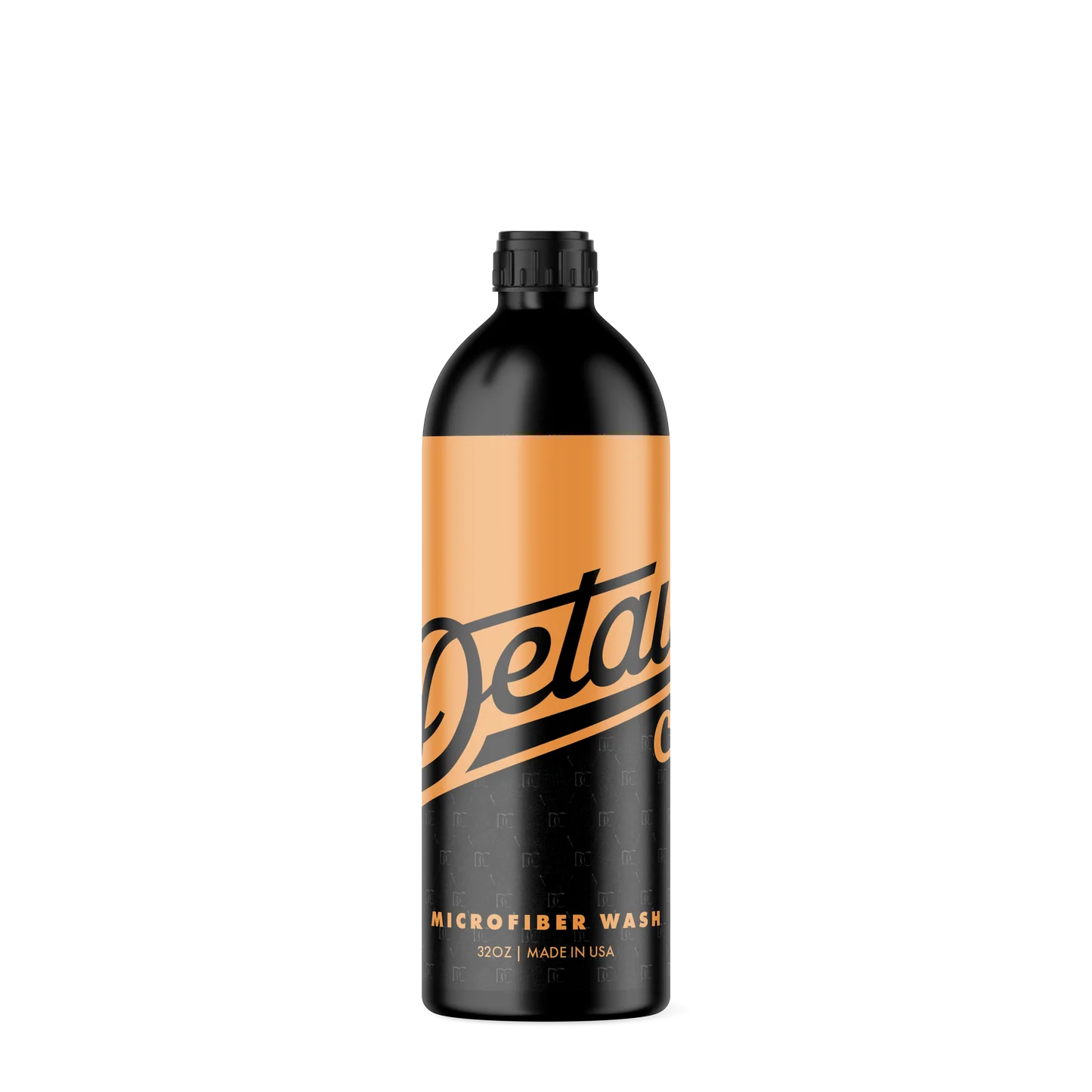
Detail Co. Microfiber Wash
The new Detail Co. formula used one ounce in the HE machine and no presoak in this test. Seven of 29 pieces still looked dirty, leaving 22 judged clean. It was the least expensive dedicated standalone microfiber wash in this group at the dose used.
Its overall score was held back by other categories, including availability and the hazard-profile rubric. That makes it a good example of why the final total needs context. This entry is the newer formula shown in the episode, not the older bottle discussed separately.
04 / An additive changes the math
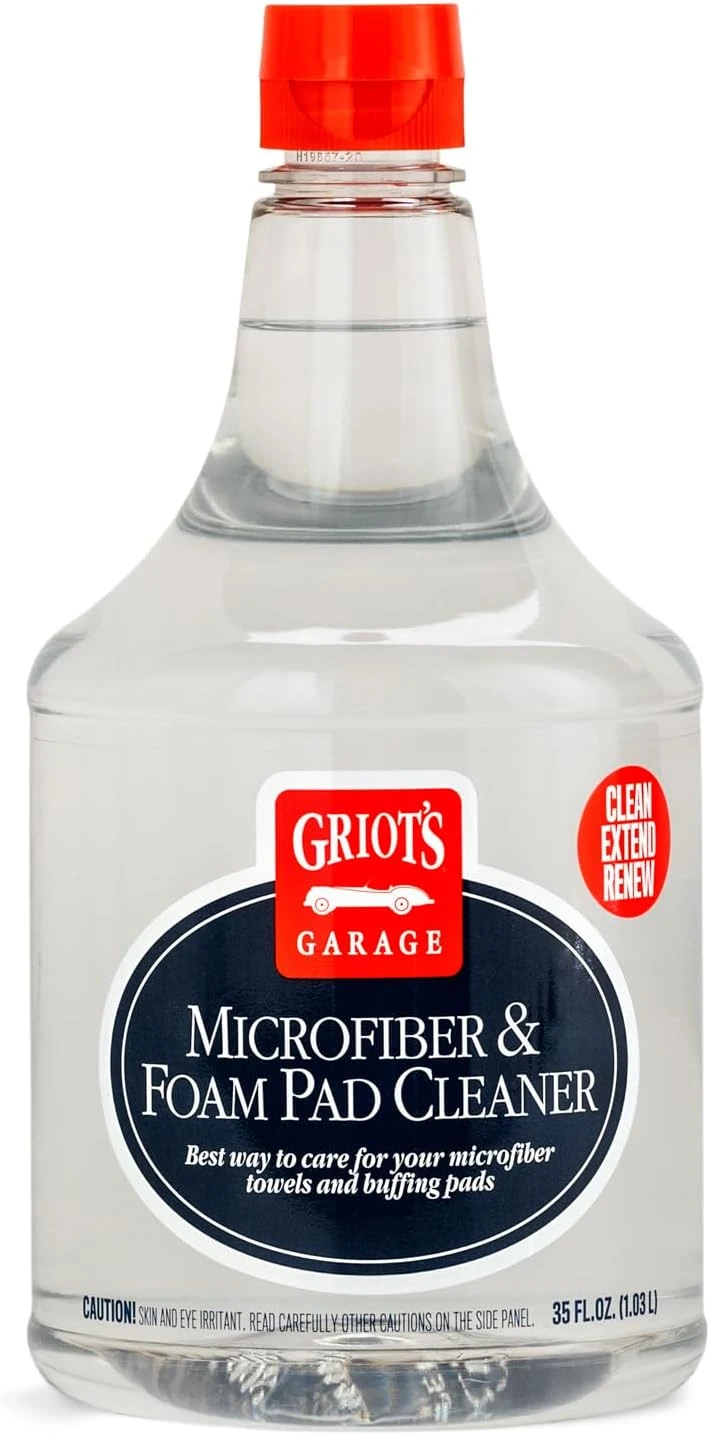
Griot’s Garage Microfiber & Foam Pad Cleaner
For the machine-wash method evaluated here, Griot’s calls for normal liquid laundry detergent alongside the cleaner. The price of the bottle alone therefore does not describe the treatment cost. Six of 24 inspected items still needed attention.
Read the directions before comparing this with a standalone wash. The result belongs to the combined treatment, not to Griot’s by itself.
05 / Strong result, limited sourcing
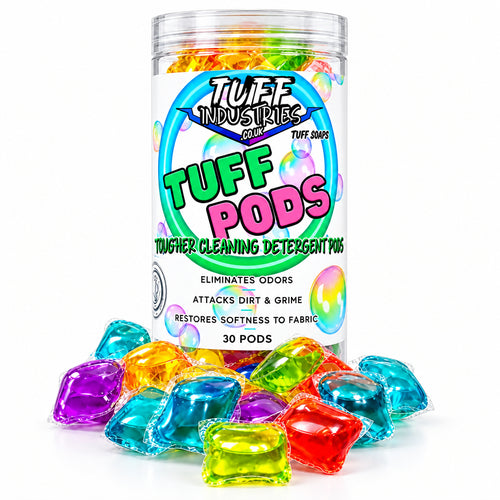
TUFF Industries Microfiber Detergent Pods
TUFF’s combined treatment finished second in visual cleaning. The method used a pod plus regular detergent, so the reported cost includes both. The polishing-pad observations were less encouraging, another reason not to treat the towel percentage as a claim about every item.
Availability and documentation were the bigger drawbacks. The pods were difficult to source during the research and appeared unavailable. I am not treating that as verified permanent discontinuation, and there is no verified purchase link to recommend here.
06 / A familiar product, a disappointing round
P&S Rags to Riches
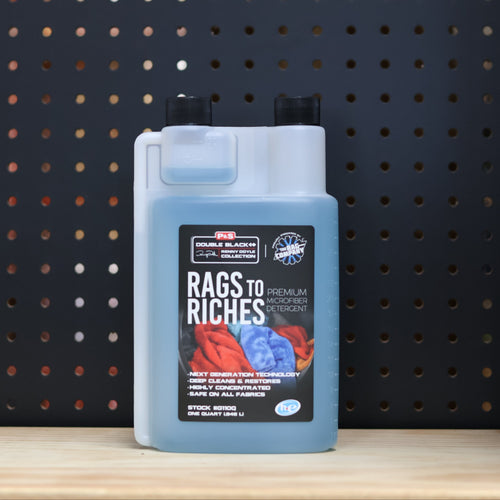
The towels had the soft, grabby feel I associate with Rags to Riches, but more visible contamination remained than I expected, even with the presoak. It had the lowest visual cleaning rate in this round.
This is one load comparison with uneven starting contamination. It does not establish that Rags to Riches cannot clean microfiber. It also does not cancel out the result I observed. Remember that its scored cost excludes the second presoak bucket.
07 / Did the extra rinse step help?
Tide + a citric-acid rinse
This method used Tide in the wash and approximately one tablespoon of pure citric acid in the rinse. Six of 23 items still needed attention. The acid was kept separate from the detergent wash; this was not a premixed detergent recipe.
It placed second overall because the score includes more than cleaning, but its visual cleaning rate was lower than Tide alone. Since the loads began with different contamination, that does not prove the acid caused the difference. It means this round did not demonstrate an extra cleaning benefit.
Follow product and machine instructions rather than treating an experimental rinse as a universal towel-care recommendation.
Make the results useful
Which result fits your priorities?
A two-question guide based on this episode. It does not calculate a new test score or predict how your towels will perform.
A practical microfiber wash routine
Detergent choice is only part of towel care. As a starting point, sort microfiber away from lint-shedding laundry and separate the dirty jobs from paint, glass and drying towels. Follow the towel and detergent directions for dose, water temperature and any presoak.
Skip fabric softener and dryer sheets. Rinse thoroughly, use an extra rinse when appropriate, and follow the towel’s low-heat or no-heat drying instructions. Inspect towels before putting them back into service. Looking brighter does not prove that a towel is free of residue or safe for a sensitive surface.
For manufacturer care guidance, see The Rag Company’s microfiber washing guide. For your own kit, browse microfiber detergents and towels, pads and applicators at That Detail Shop.
Safety documentation and test limitations
The episode scored documentation availability separately from the finished-product hazard profile. Finding an SDS is not the same as finding a product with no hazards. Likewise, failing to locate a document does not prove a product is unsafe. The original safety scores are reported as part of the episode, not presented as a new certification or a claim that one detergent is harmless.
Use the current label and the SDS for the exact product and market you own. Useful manufacturer and product-document links:
- P&G safety-data-sheet finder for Tide products. Match the product and formulation; a different brand’s free-and-clear SDS is not a Tide SDS.
- P&S Rags to Riches SDS (PDF).
- Griot’s Microfiber Cleaner SDS (PDF).
- Detail Co. Microfiber Wash SDS (PDF).
- YumCars Yum Wash MF SDS (PDF).
What I would tighten next time: matched towel types, controlled contamination, repeated loads, clearer separation of pads from towels, a published category worksheet, and measured absorbency. I would also count every presoak dose consistently. Until those variables are controlled, avoid treating a small percentage difference as proof that one formula always beats another.
Episode chapters
Go directly to the part you want to inspect.
Open all 24 chapter links
- What is the best microfiber wash?
- Introducing The Detailing Standard
- How the scoring system works
- YumCars Wash MF
- Griot’s Microfiber & Foam Pad Cleaner
- TUFF Microfiber Detergent Pods
- P&S Rags to Riches
- Detail Co. Microfiber Wash
- Tide Free & Gentle + Citric Acid
- Sorting the dirty microfiber
- Two days of washing later
- Real cost per use
- TUFF Pods results
- P&S Rags to Riches results
- Tide + Citric Acid results
- YumCars results
- Griot’s results
- Detail Co. results
- Tide Free & Gentle results
- Final scoring
- Best pure cleaning result
- Second place
- Overall winner
- What should we test next?
Help shape the next test
The point of The Detailing Standard is to show the process, explain the judgment calls and keep improving. I want strong performers to come back against new challengers, not disappear after one video.
Leave a comment on the episode with the category you want next and the part of the scoring you would change. Pre-washes, snow foams, wheel cleaners or something else? You can also follow thatdtailguy on YouTube, Instagram and TikTok.
Trust Costs Nothing.

Join the discussion